Ser PFKNR en 2025

Visual Storytelling

Explores how visual language can tell a story—using symbols, spatial hierarchy, and cultural references to communicate meaning without explanation.

Story Question

What does it mean to exist as Puerto Rican today?

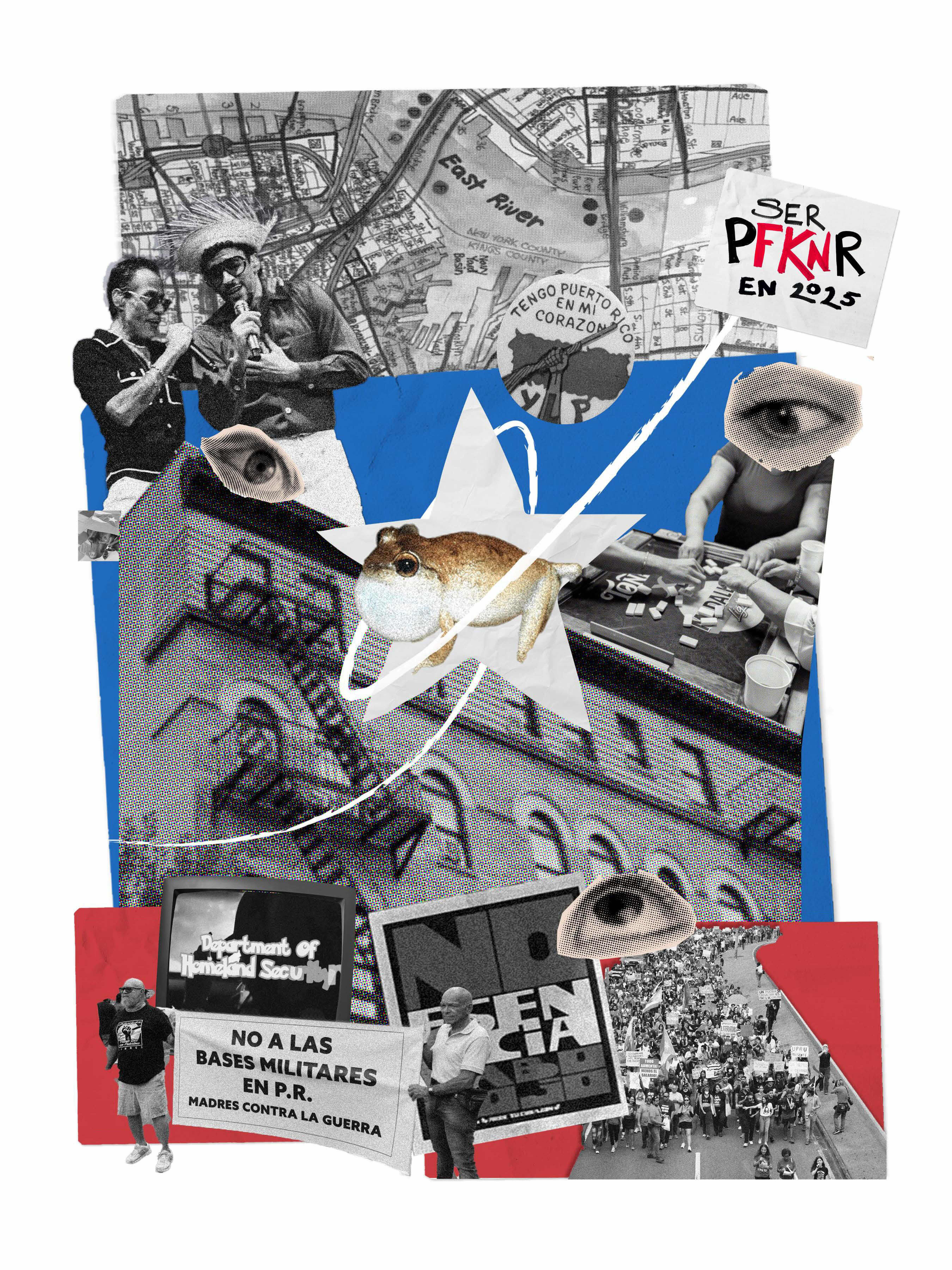
The poster is structured vertically, using spatial hierarchy to guide the viewer through a layered story. Each section represents a different emotional register rather than a chronological timeline.

Narrative Structure

Act I: Joy, Culture, and Belonging (Top Section)

The top half of the poster centers moments of collective joy and cultural continuity. These visuals establish grounding before the narrative descends into conflict.

  • Brooklyn Community Map
    Highlights Puerto Rican spaces in Brooklyn, affirming that Boricua identity extends beyond the island and lives where community, culture, and organizing thrive.Brooklyn Community Map
  • "Preciosa" Performance
    Bad Bunny and Marc Anthony singing “Preciosa” symbolize generational continuity, with the song serving as a cultural anchor of pride, nostalgia, and resistance.
  • Tonita’s Caribbean Social Club
    Represents cultural survival through everyday presence—spaces that sustain identity through lived experience, not performance.
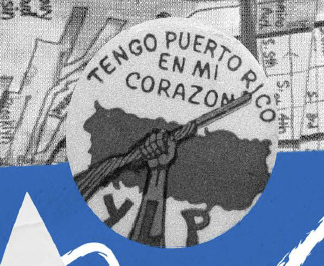
  • Young Lords Party Pin
    Links contemporary identity to a legacy of political resistance and self-determination, grounding the present in historical struggle.

Act II: Being Seen, Watched, and Held (Center)

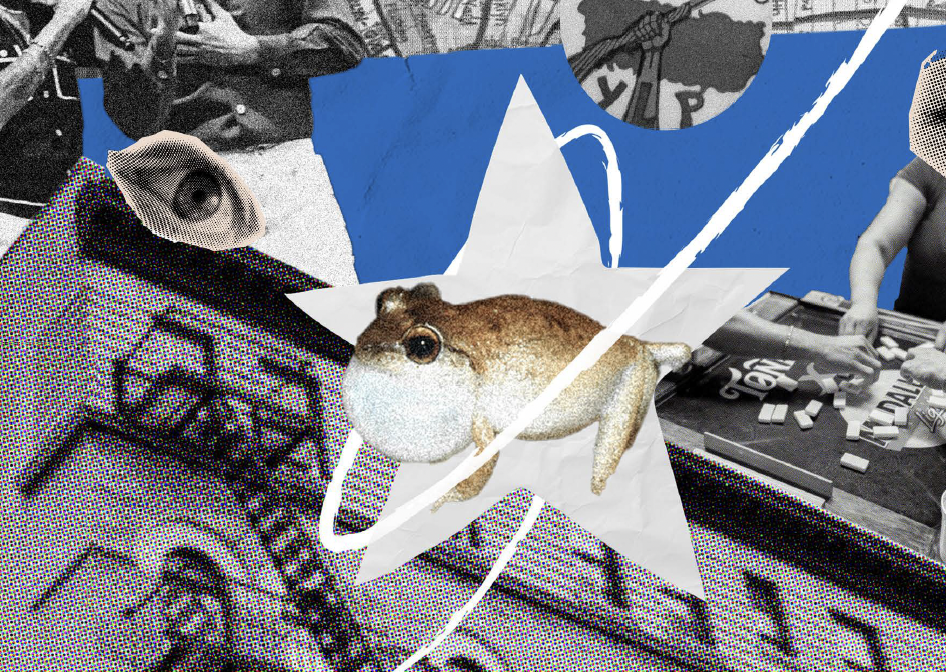
At the center of the poster is the coquí, a symbol that transcends geography. The coquí represents all Puerto Ricans—those on the island and in the diaspora—bound by shared memory and sound.

Surrounding the coquí are eyes. These eyes are not singular or neutral; they represent overlapping forces of observation:

  • Social expectations
  • Political surveillance
  • Media narratives
  • Colonial scrutiny

This moment in the story is intentionally still. The viewer is asked to pause here. The eyes do not accuse, but they do pressure. They suggest the emotional weight of being constantly perceived, judged, and politicized.

Act III: Conflict, Resistance, and Reality (Bottom Section)

The lower half of the poster introduces political and systemic harm. This section shifts the emotional tone from celebration to confrontation.

Key story moments include:
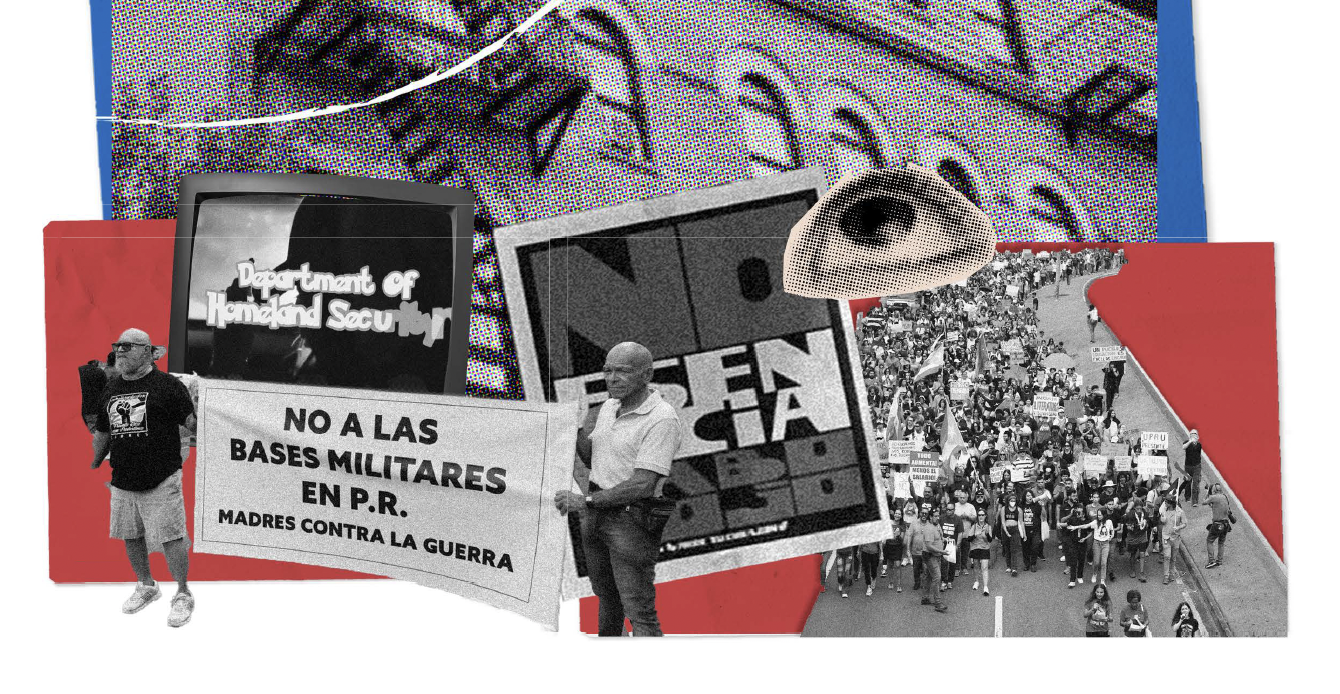
  • Anti-Latino & Anti-Immigrant Ideology
    Addresses the growing normalization of xenophobic and racialized rhetoric in the U.S., impacting Puerto Rican communities despite their citizenship.
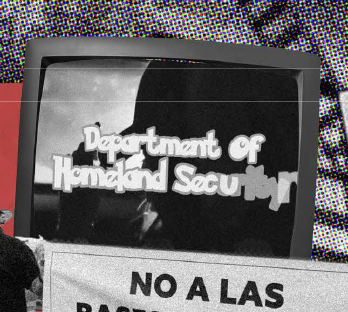
  • ICE Presence in Puerto Rico
    Highlights the contradiction of immigration surveillance and enforcement imposed on a population that is already legally American.
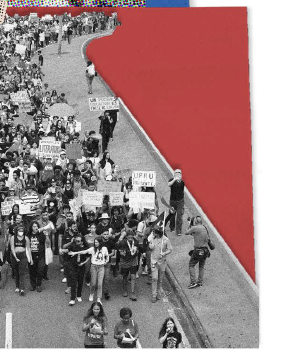
  • University of Puerto Rico Protests
    Student-led resistance to deep budget cuts underscores education as both a site of struggle and collective action.
  • “No Esencia” Movement (Cabo Rojo)
    Opposition to a luxury resort development reflects broader issues of land, displacement, and environmental justice—framing land as identity, not property.
Visual Storytelling Techniques

This project uses intentional visual strategies to convey meaning without heavy explanation

The minimal use of text is deliberate—the story is built on recognition rather than explanation:

Symbolic imagery (coquí, eyes) in place of explanatory text
Cultural specificity without translation
Juxtaposition of joy and harm within the same frame
Artifacts (maps, pins, photographs) as narrative anchors
Takeaways

Ser PFNR en 2025 is ultimately a story of endurance and complexity.

It rejects simplified portrayals of Puerto Rican identity as either celebration or suffering, instead holding both at once. As a storytelling approach, the project demonstrates that meaning can be spatial rather than linear, that cultural symbols can carry narrative weight without explanation, and that preserving tension can be more truthful than offering resolution.