
Improve accessibility in a digital exhibit
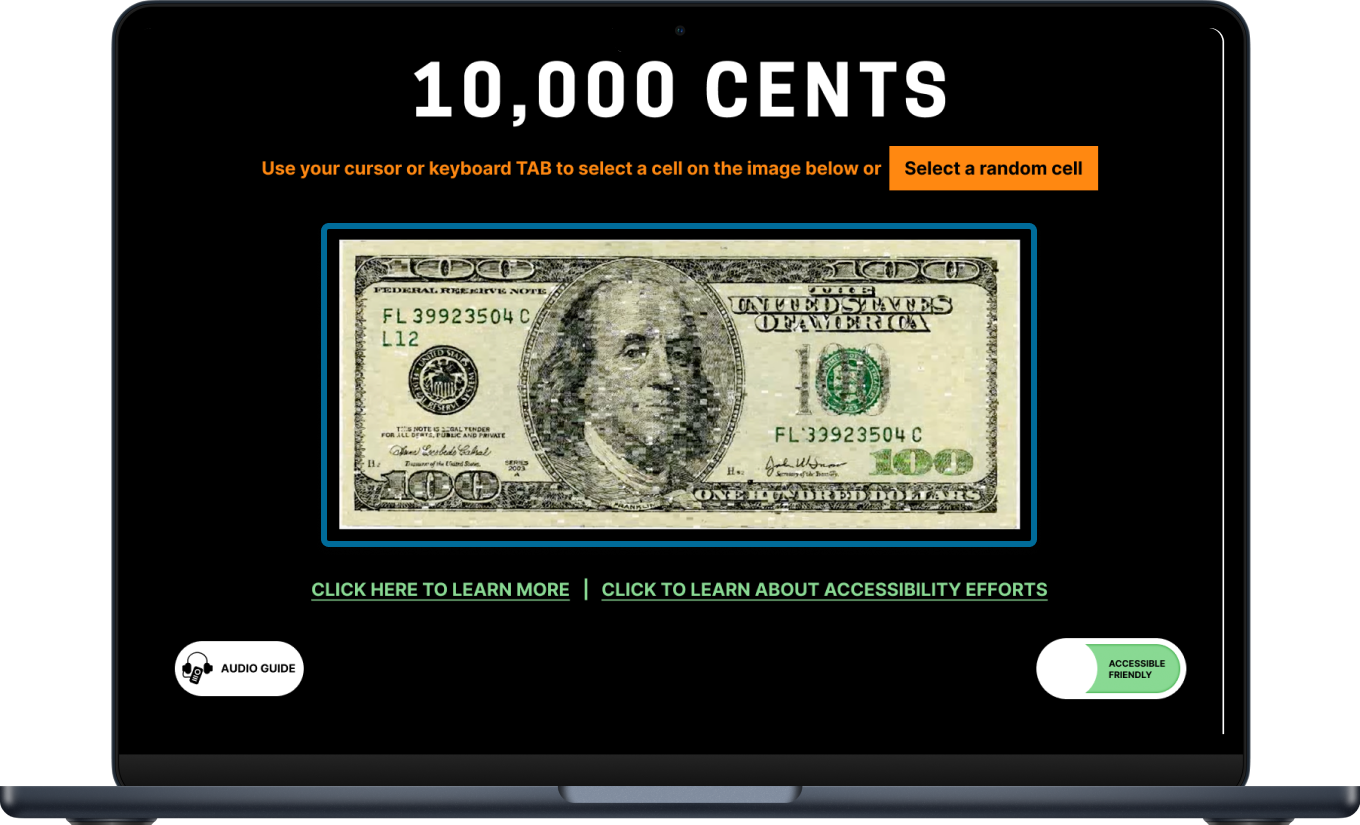
In the original experience, visitors used a computer to manually select a pixel from the 10,000 Cents image.
A standout then revealed two views: the actual pixel from a real $100 bill and a hand-drawn recreation of that pixel. However, the experience included no accessible features for blind or visually impaired visitors.
Offended criteria: WCAG 1.1 - Text Alternatives
Offended criteria: WCAG 2.5.8 Target Size (Minimum)
Offended criteria: WCAG 1.4.11- Non-text Contrast

Randomly select cells for reads aloud the image's alt description to allow non-visual users to interact with each pixel, preserving the artistic integrity of the exhibit.

Screen reader–friendly structure for titles and navigation

Turning visual information into sound for accessible, inclusive experiences.

Randomly select cells for authentic non-visual interaction

Enables keyboard navigation for non-mouse users through tab-index search and ensures compliance with WCAG 2.1, ADA Title III, and Section 508 of Rehabilitation Act. Allows users to explore exhibit content in both original and accessible experience.

Verbally guide users through both the exhibit and the project context

Allows users to seamlessly toggle between the "accessible" and original layouts
This project was well received by the Cooper Hewitt team, who appreciated our accessible, thoughtful reinterpretation of the original work. Although our goal was to make 10,000 Cents accessible, the Cooper Hewitt team was especially excited by our multi-sensory approach, which invited visitors of all abilities to engage with the piece in inclusive, interactive ways.
There is still room to grow:
How might blind and deaf users fully engage?
How can we broaden alt text and narration to support other languages?