
speculative technology supports conflict resolution
.png)
Speculative / Concept
UX Researcher & Designer
Emotional Design, User Testing
Most digital tools for communication assume users are calm, rational, and ready to problem-solve. But real interpersonal conflict doesn't work that way. Each stage of a conflict — before, during, and after — carries distinct emotional states that shape what people are able to hear and do.
DESIGN CHALLENGE
Drawing from three frameworks — emotional design theory, restorative justice principles, and HCI research — I mapped the emotional arc of conflict to specific design requirements at each stage.
Acknowledge emotional strain first
Structured prompts help users name and express their emotional state before anything else. Validation precedes guidance.
Don't fight emotion — use it
Emotions attach to objects, people, and ideas. The design works with this rather than trying to neutralize it, turning emotional input into structured dialogue.
Translate internal tension outward
Onboarding and reflection features help users turn internal emotional states into communicable language — the bridge between feeling and resolution.
Restorative justice principles shaped the core interaction model: rather than determining who was right, the app creates space for everyone affected to contribute to repairing the harm.
I used scenario-mapping exercises to simulate high-stakes conversations, then observed where the flow broke down, not just whether users completed tasks, but how they felt while doing them.
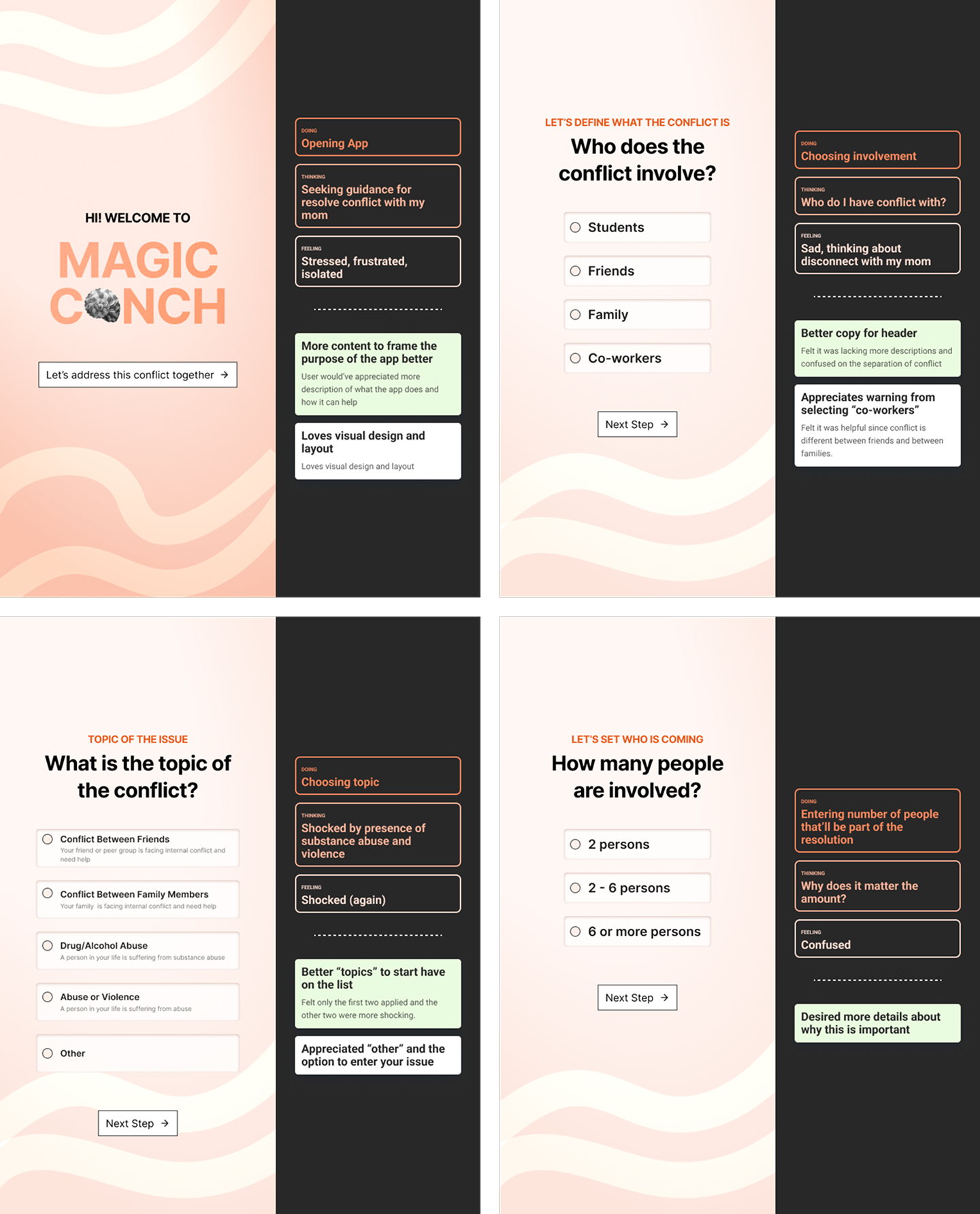
Assessed whether the flow was preparing users emotionally, not just walking them through steps. Used scenario-mapping to simulate conflict preparation before they entered the app.
Key insight
Too many options introduced too early felt overwhelming. Users needed emotional validation before being given agency. This shifted the onboarding sequence significantly — guidance had to follow grounding, not precede it.
Evaluated how users' emotional states evolved across the flow. Tracked four dimensions: positive affect, anxiety, interpersonal connection, and perceived emotional load.
.png)
Key insight
Structured pauses and guided prompts reduced the sense of being flooded. Reflection moments were redesigned to feel like collaboration, not therapy. The emotional arc of the flow became as important as the information architecture.
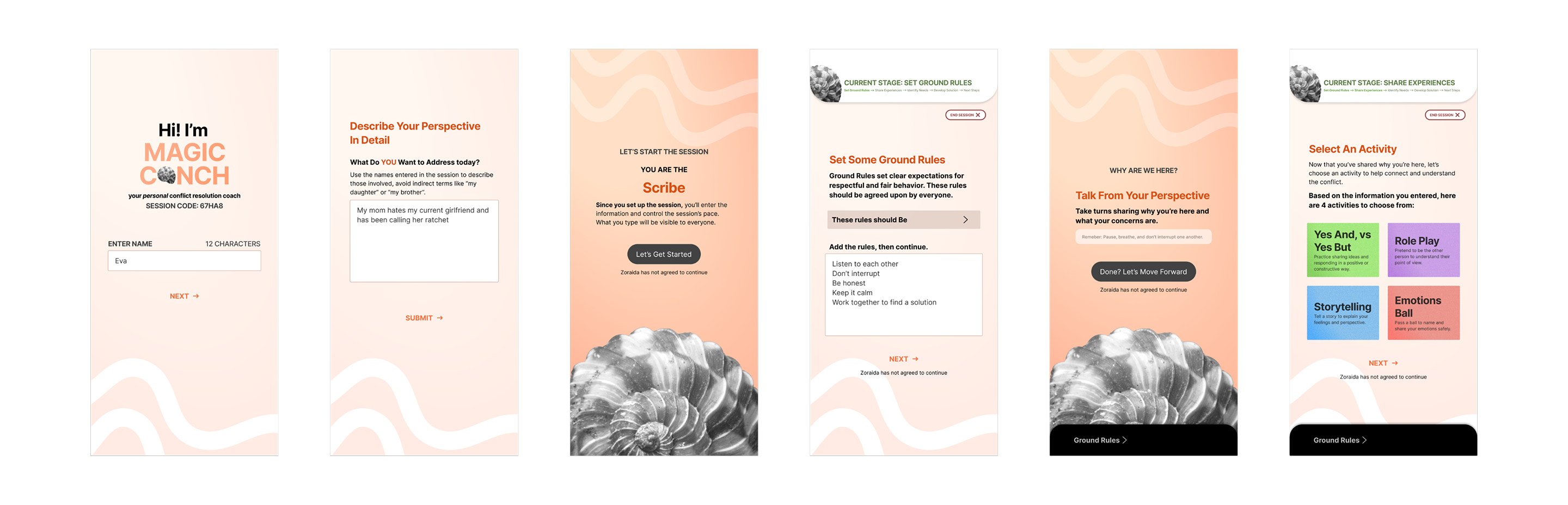 Test Prototype
What the Project Became Through research, prototyping, and testing, the project evolved to address how I help people resolve conflict without making an app that replaces the emotional labor.
Emotional Desgin To resolve a highly emotional user process, emotional design theory centered on ethical technological use and to better understand the emotional state of the user flow.
Magic Conch taught how essential it is to implement emotional design in the creative process. When we use any digital interface, we go through a series of emotional states depending on the experience, and bettering understanding how to understand these states can lead to great design.